
How AI is Revolutionizing the Finance Industry: Trends and Applications
The finance industry has always been at the forefront of technological innovation, but the rise of Artificial Intelligence (AI) is ushering in a new era of transformation. From customer service to risk management, AI is reshaping how financial institutions operate, making processes faster, more secure, and more efficient. This article explores the current trends and applications of AI in finance, highlighting its impact on banking, lending, fraud detection, and more.
The Growing Influence of AI in Banking
Artificial intelligence has become a cornerstone of modern banking, with banks leveraging AI to enhance customer experiences, streamline operations, and improve decision-making. One of the most visible applications of AI in banking is the use of chatbots and virtual assistants. These AI-powered tools are now standard across major financial institutions, providing 24/7 customer support through mobile apps, websites, and even voice-activated devices.
For example, Ally Financial has integrated a machine-learning-based chatbot into its mobile banking application, allowing customers to manage their accounts, make transfers, and receive payment summaries through text or voice commands. Similarly, Capital One introduced Eno, a virtual assistant that communicates with users via text, email, and mobile apps, offering features like fraud alerts, credit tracking, and account balance updates.
Another notable example is Kasisto, a company that provides conversational AI platforms for banks. Its KAI platform enables banks to build custom chatbots that can handle complex financial queries, such as international transfers and credit card management. Banks like DBS Bank and Standard Chartered Bank have adopted KAI to improve customer engagement and reduce the need for human intervention.

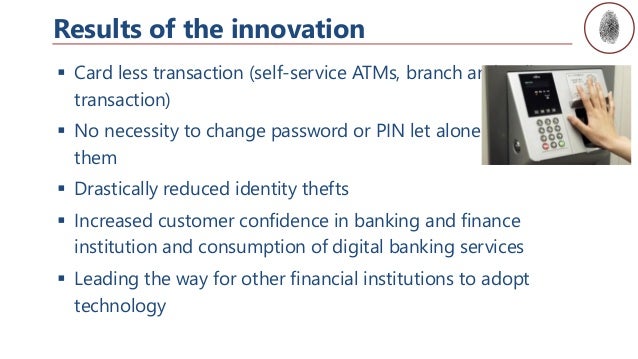
In addition to chatbots, AI is also being used for biometric authentication, enhancing security and convenience for customers. NatWest, a U.K. bank, allows customers to open accounts remotely using AI-powered facial recognition technology. This not only speeds up the onboarding process but also reduces the risk of identity fraud.
AI in Fraud Detection and Risk Management

One of the most critical areas where AI is making a significant impact is in fraud detection and risk management. Traditional methods of detecting fraudulent activity rely heavily on rule-based systems, which can be slow to adapt to new threats. AI, however, can analyze vast amounts of data in real time, identifying patterns and anomalies that may indicate fraudulent behavior.
Socure offers an AI-driven identity verification system called ID+ Platform, which uses machine learning to analyze an applicant’s online, offline, and social data to ensure compliance with Know Your Customer (KYC) regulations. This helps banks prevent identity theft and meet regulatory requirements more efficiently.
Similarly, Vectra provides an AI-powered cyber-threat detection platform that automates the identification of potential threats, accelerates investigations, and detects compromised information. Its platform has been instrumental in preventing security breaches for financial institutions.

Another key player in this space is FIS, which uses C3 AI in its compliance hub to help capital markets firms fight financial crime. The platform leverages machine learning to aggregate and analyze client data, improving Anti-Money Laundering (AML) and KYC processes.
AI in Lending and Credit Scoring

AI is also transforming the lending and credit scoring landscape. Traditional credit scoring models often rely on limited data points, such as credit history and income, which can lead to biased outcomes. AI, on the other hand, can analyze a broader range of data, including social media activity, spending habits, and transaction patterns, to create more accurate and fairer credit assessments.
ZestFinance uses AI to generate fairer credit models by downgrading data that leads to unfair decisions. This approach helps reduce discrimination in lending while still maintaining the integrity of the credit assessment process.
Upstart, a lending company, employs AI to make affordable credit more accessible while lowering costs for its bank partners. Its platform uses machine learning to evaluate loan applications, resulting in faster approvals and better risk assessments.

AI in Investment Banking and Financial Analysis

Investment banking has also seen a surge in AI adoption, particularly in market analysis and risk assessment. Firms are using AI to simulate market scenarios, identify potential risks, and make data-driven investment decisions.
Simudyne, a tech provider, uses agent-based modeling and machine learning to run millions of market scenarios, helping investment bankers spot so-called tail risks—low-probability, high-impact events. This technology has been recognized by major institutions like Barclays, which invested in Simudyne in 2019.
Kensho, an S&P Global company, provides machine intelligence and data analytics to leading financial institutions. Its software can extract insights from tables and documents, offering easily understandable answers to complex financial questions.
The Future of AI in Finance

As AI continues to evolve, its role in the finance industry will only grow. Financial institutions are increasingly adopting generative AI to enhance customer interactions, automate back-office operations, and improve decision-making. However, with these advancements come challenges, including issues related to data privacy, bias, and regulatory compliance.
To fully harness the potential of AI, banks must invest in robust operating models that align with their strategic goals. This includes building teams with the right skills, ensuring transparency in AI systems, and fostering a culture of innovation.
Conclusion
AI is no longer a futuristic concept—it is a present-day reality that is reshaping the finance industry. From customer service and fraud detection to lending and investment banking, AI is driving efficiency, accuracy, and innovation. As financial institutions continue to adopt and refine AI technologies, they will be better positioned to meet the evolving needs of their customers and stay competitive in an increasingly digital world.