What Are Index Funds? A Complete Guide for Beginners
Index funds have become a cornerstone of modern investing, offering a simple, cost-effective way to build wealth over time. Whether you’re just starting out or looking to diversify your portfolio, understanding what index funds are and how they work is essential. In this guide, we’ll break down everything you need to know about index funds, from their basic structure to their advantages and disadvantages.
What Is an Index Fund?
An index fund is a type of investment vehicle designed to track the performance of a specific financial market index, such as the S&P 500 or the Dow Jones Industrial Average. Unlike actively managed mutual funds, which rely on fund managers to pick individual stocks, index funds follow a passive strategy by replicating the composition of a given index.
How Do Index Funds Work?
Index funds operate by purchasing all or a representative sample of the securities included in a specific index. For example, if an index fund tracks the S&P 500, it will hold shares of all 500 companies that make up that index, in the same proportions as their weight within the index. This approach ensures that the fund’s performance closely mirrors that of the index it’s tracking.
Types of Index Funds
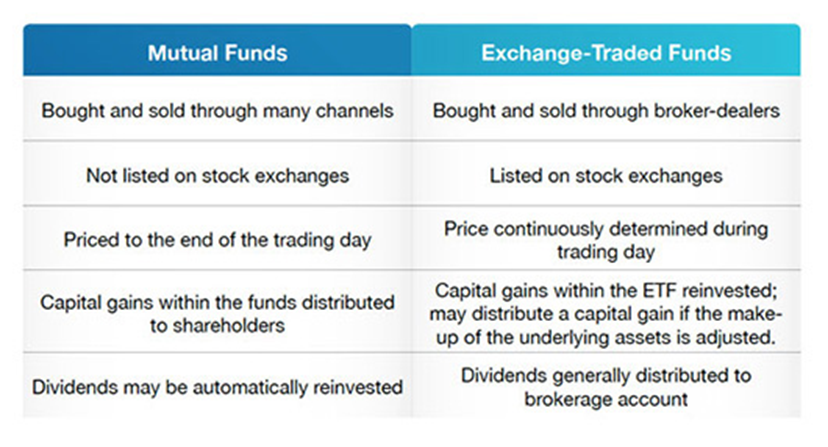
There are two main types of index funds: mutual funds and exchange-traded funds (ETFs). Both aim to replicate the performance of a benchmark index but differ in how they are structured and traded.
Mutual Funds
Mutual funds are pooled investment vehicles that are priced once per day after the stock markets close. They are typically bought and sold through investment companies like Fidelity, Vanguard, or Charles Schwab. Index mutual funds often have lower expense ratios compared to actively managed funds because they don’t require constant trading or research.
Exchange-Traded Funds (ETFs)
ETFs are similar to mutual funds in that they track an index, but they trade on stock exchanges throughout the day, much like individual stocks. This means investors can buy and sell ETFs at any time during market hours. ETFs are known for their flexibility, low costs, and tax efficiency.
Advantages of Index Funds

1. Low Costs
One of the biggest benefits of index funds is their low expense ratio. Since they don’t require active management, the fees associated with these funds are significantly lower than those of actively managed funds. For example, the average expense ratio for an S&P 500 index fund is around 0.03% to 0.10%, compared to 1.5% or more for many actively managed funds.
2. Diversification
Index funds provide broad diversification by holding a wide range of securities. This reduces the risk associated with investing in individual stocks or sectors. For instance, an S&P 500 index fund includes companies across various industries, ensuring that no single company’s performance has a major impact on the fund.
3. Simplicity
Index funds are easy to understand and manage. Investors don’t need to spend time researching individual stocks or trying to time the market. The fund does the heavy lifting, following a predefined strategy to match the performance of a specific index.
4. Long-Term Performance
Historically, index funds have outperformed actively managed funds over the long term. According to studies by S&P Global, the majority of actively managed funds fail to beat their benchmark indices over a 10- to 15-year period. This makes index funds a reliable choice for long-term wealth building.
Disadvantages of Index Funds

1. No Outperformance
Since index funds are designed to mirror the performance of a specific index, they cannot outperform it. If the market declines, the fund will also decline. This lack of upside potential may be a drawback for investors seeking higher returns.
2. Limited Flexibility
Index funds are constrained by the rules of the index they track. This means they cannot deviate from the index’s composition or make strategic adjustments based on market conditions. As a result, they may not perform well during periods of market volatility or sector-specific downturns.
3. Tracking Error
While index funds aim to replicate the performance of an index, there can be slight differences due to factors like transaction costs, dividend reinvestment, and market timing. This discrepancy is known as tracking error.
Popular Index Funds in the U.S.
Several index funds have gained popularity due to their low costs, strong performance, and broad market exposure. Here are some of the most well-known ones:
1. Fidelity ZERO Large Cap Index (FNILX)
- Expense Ratio: 0%
- Track: Fidelity U.S. Large Cap Index
- Best For: Investors seeking a no-cost, diversified large-cap fund.
2. Vanguard S&P 500 ETF (VOO)
- Expense Ratio: 0.03%
- Track: S&P 500 Index
- Best For: Long-term growth with minimal fees.
3. SPDR S&P 500 ETF Trust (SPY)
- Expense Ratio: 0.095%
- Track: S&P 500 Index
- Best For: Investors who want exposure to the broader U.S. market.
4. iShares Core S&P 500 ETF (IVV)
- Expense Ratio: 0.03%
- Track: S&P 500 Index
- Best For: Investors looking for a low-cost, broad-market fund.
5. Schwab S&P 500 Index Fund (SWPPX)
- Expense Ratio: 0.02%
- Track: S&P 500 Index
- Best For: Cost-conscious investors who want simplicity and reliability.
How to Invest in Index Funds

Investing in index funds is straightforward and accessible to most investors. Here’s how to get started:
- Choose a Brokerage Platform: Most online brokers, such as Charles Schwab, Fidelity, and Vanguard, offer a wide selection of index funds.
- Select an Index Fund: Decide which index you want to track (e.g., S&P 500, Nasdaq, or global indices).
- Open an Account: You’ll need to open a brokerage account and fund it with the amount you wish to invest.
- Purchase the Fund: Once your account is set up, you can purchase the index fund directly through the platform.
Conclusion
Index funds are a powerful tool for investors looking to build wealth over time. With their low costs, diversification, and long-term performance, they offer a simple and effective way to participate in the stock market. Whether you’re a beginner or an experienced investor, understanding how index funds work can help you make informed decisions and achieve your financial goals.
As the saying goes, “Don’t try to beat the market—let the market work for you.” Index funds are a great way to do just that.