The Rise of SaaS Monitoring Tools: Essential Insights for Modern Businesses
As the SaaS market surges toward a projected $299 billion valuation by the end of 2025, businesses are becoming increasingly dependent on cloud-based applications. With this growing reliance comes a greater need for robust monitoring capabilities that ensure availability, performance, and security. That’s where the right SaaS monitoring tool makes all the difference.
These tools are used to monitor the health and performance of SaaS applications, helping IT teams detect downtime, troubleshoot issues, and deliver seamless user experiences. In this guide, we’ll break down some of the top SaaS tools used to monitor modern cloud environments, explore their essential features, and what to look for when choosing a tool to monitor your SaaS stack effectively.
What Are SaaS Monitoring Tools?
SaaS monitoring tools are used to monitor the performance, uptime, security, and reliability of cloud-based applications. They provide real-time insights into key metrics such as API performance, response times, latency, and error rates, ensuring optimal performance for SaaS applications and infrastructure.
Key Monitoring Capabilities to Look For
- Real-Time Performance Tracking – Keep tabs on response times, server load, and user activity across your apps.
- Downtime Alerts – Receive instant alerts when a cloud service goes down, so your team can act fast.
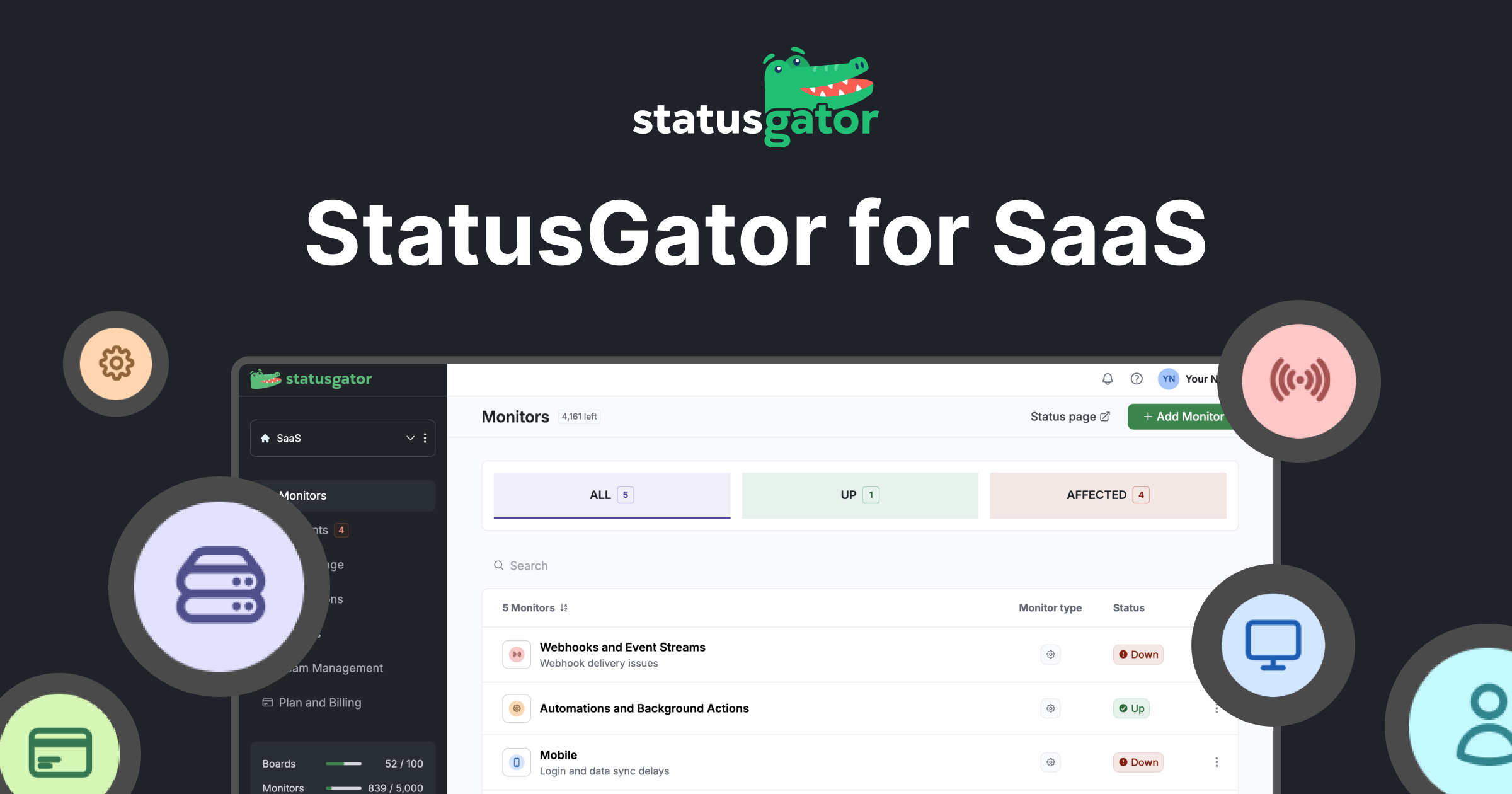
- Status Pages – Share internal or public-facing service status updates. Tools like StatusGator even aggregate the status pages of multiple SaaS providers into one unified view.
- User Experience Monitoring – Gain insights into how real users interact with your application to improve frontend performance.
- Security and Compliance Checks – Monitor applications for vulnerabilities and ensure compliance with industry regulations.
- Cost Management – Track SaaS spend and usage to optimize budgets and eliminate waste.
Whether you’re overseeing a growing SaaS environment or just starting to scale, the right monitoring tool is essential to maintaining performance and trust. Let’s dive into the best SaaS solutions available today.
Top 10 SaaS Monitoring Tools
1. StatusGator
Best for: Monitoring third-party SaaS services and cloud infrastructure dependencies
StatusGator offers a different take on SaaS monitoring. This solution aggregates status data from over 5,000 cloud services, giving you a unified view of your entire external stack.
Features
– Real-time uptime monitoring across 5,000+ SaaS services and websites.
– Aggregated status page monitoring from thousands of providers.
– Early warning signals detect anomalies before official status updates.
– Custom, branded status pages to communicate incidents and maintenance.
– Private status pages for internal IT team visibility.
– Instant alerts via Slack, Microsoft Teams, email, webhook, and more.
2. New Relic
Best for: DevOps and SRE teams needing unified monitoring
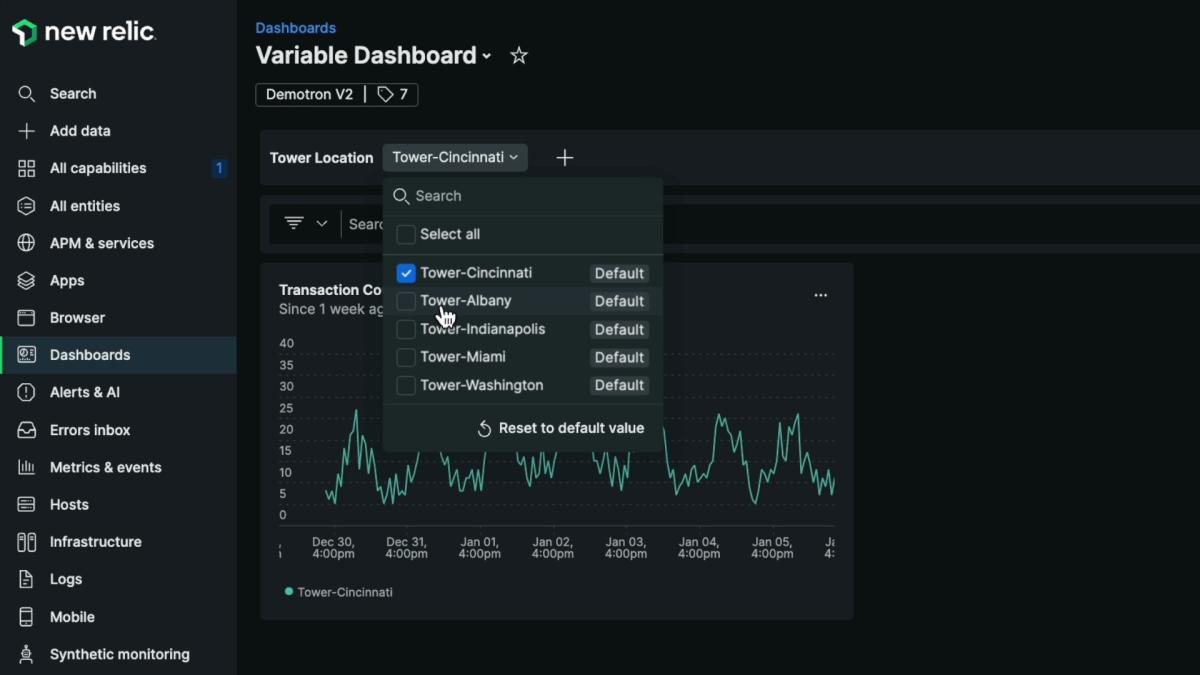
New Relic offers full-stack observability with deep support for APM, logs, infrastructure, and even RUM (Real User Monitoring). It’s known for powerful dashboards, anomaly detection, and being CI/CD-friendly.
Features
– Full-stack APM to monitor application health, transactions, and dependencies in real time.
– AI-driven insights to detect anomalies, predict issues, and trigger automated alerts.
– Infrastructure and deployment monitoring for visibility into cloud-native, hybrid, and on-prem infrastructure.
– Collaboration tools for DevOps and SRE to share dashboards and reports.
3. Sentry
Best for: Real-time error tracking and debugging
Sentry is built for developers who want to catch and fix application bugs quickly. With code-level visibility and performance monitoring, it’s perfect for SaaS teams prioritizing quality and stability.
Features
– Real-time error tracking automatically detects crashes, exceptions, and performance issues.
– Custom dashboards and queries to monitor application health across projects and services.
– Distributed tracing of slow API calls, transactions, and dependencies.
4. AppDynamics
Best for: Business-critical app monitoring with deep insights
AppDynamics offers end-to-end tracing and real-time performance analytics tied to business outcomes. Owned by Cisco, it’s built for enterprises that need to see the big picture from backend code to user behavior.
Features
– End-to-End transaction tracing and real-time analytics follow each business transaction.
– AI-powered performance monitoring and anomaly detection.
– Infrastructure and cloud monitoring that delivers deep visibility into on-premises, cloud, and hybrid environments.
5. Nagios
Best for: Customizable IT infrastructure monitoring
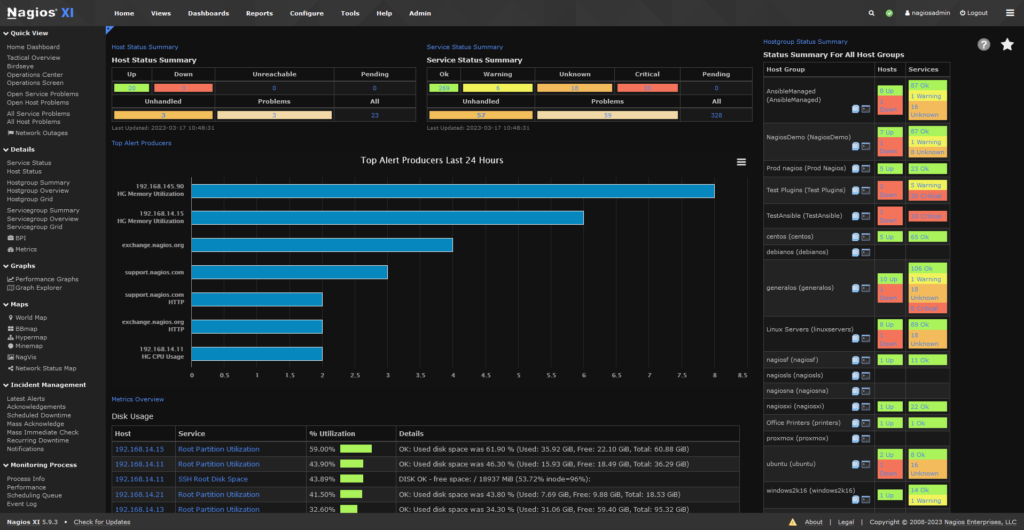
Nagios is open-source, flexible, and powerful. With a huge plugin ecosystem, it’s ideal for tech-savvy teams that want total control over what they monitor and how.
Features
– IT network monitoring includes servers, network devices, applications, and cloud services.
– Real-time alerts to catch issues early.
– Advanced reporting with diagnostics and capacity planning.
6. LogicMonitor

Best for: Hybrid IT and cloud infrastructure monitoring
LogicMonitor auto-discovers resources and sets up monitoring for servers, apps, databases, and networks, on-prem or cloud. With AI-powered anomaly detection and clean dashboards, it’s a solid enterprise-grade platform.
Features
– Automated discovery and intelligent monitoring.
– End-to-end infrastructure visibility.
– Proactive alerting and AI-powered insights.
7. Atatus
Best for: APM with frontend + backend visibility
Atatus provides everything from error tracking and synthetic monitoring to real user experience metrics. It’s a great all-in-one APM choice for teams that want deep monitoring without the enterprise-level pricing.
Features
– Real-time error tracking to instantly identify crashes, exceptions, and performance issues.
– Application performance monitoring to track response times, database queries, and system bottlenecks.
– User experience monitoring that analyzes page load times and real user interactions.
8. Site24x7
Best for: Full-stack synthetic and real user monitoring
Site24x7 monitors everything from websites to cloud apps and servers, with deep support for synthetic checks and cloud infrastructure observability across AWS, Azure, and GCP.
Features
– Full-stack web and cloud monitoring to track application uptime, performance, and reliability.
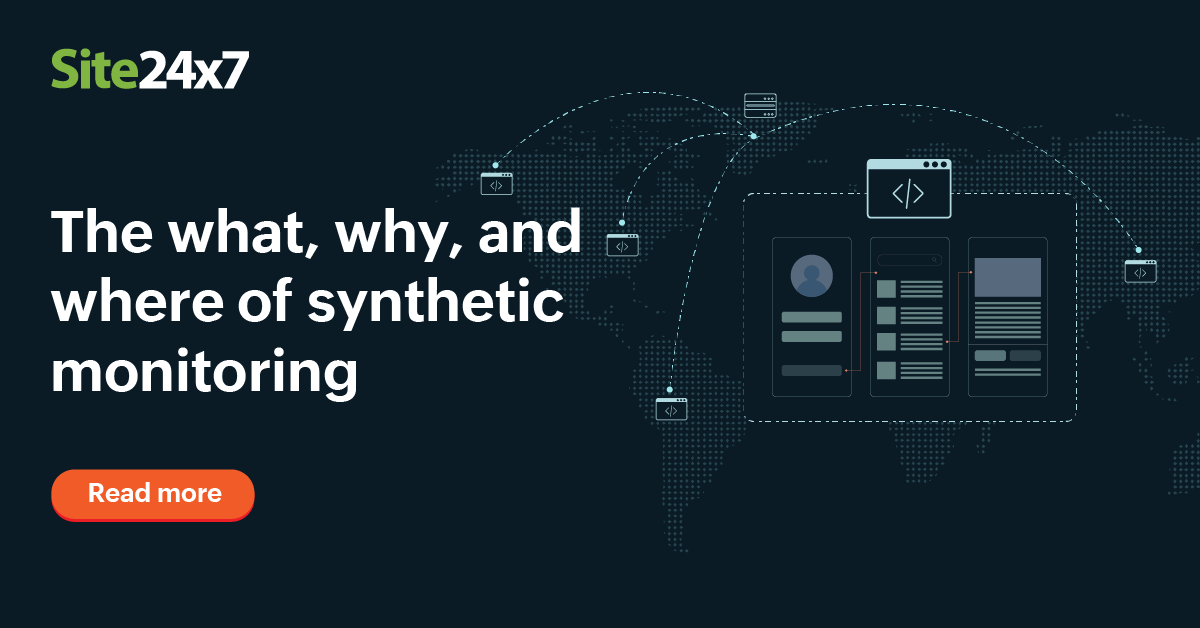
– Synthetic monitoring that simulates user journeys to uncover performance bottlenecks.
– Cloud and SaaS platform integrations.
9. SolarWinds
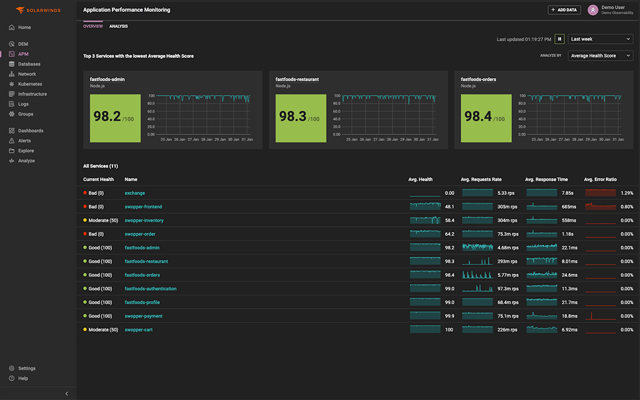
Best for: Comprehensive monitoring capabilities with APM, uptime, and log monitoring for SaaS apps
SolarWinds combines monitoring software – AppOptics, Pingdom, and Loggly into a single, powerful observability platform. Designed for full-stack monitoring, it helps IT and DevOps teams ensure application reliability, performance, and user satisfaction.
Features
– Infrastructure and application monitoring on-premises, and hybrid environments.
– Tracking key system metrics like CPU, memory, and network usage.
– Real user and synthetic monitoring with Pingdom.
10. Datadog
Best for: Full-stack observability and analytics in cloud-native environments
Datadog provides unified monitoring data across distributed environments through a single, consolidated platform. It’s is a go-to monitoring platform for developers and ops teams looking to monitor logs, metrics, traces, and user experience all in one place.
Features
– Real-time monitoring that continuously collects logs, metrics, and traces.
– AI-powered analytics and AI-driven anomaly detection.
– Infrastructure visualization to easily build real-time dashboards.
Conclusion
As businesses scale and cloud adoption continues to rise, having a powerful monitoring system is no longer optional, it’s essential. The tools covered in this guide offer a wide range of capabilities to help IT and DevOps teams maintain optimal performance, resolve network issues quickly, and ensure a seamless user experience across SaaS environments.
Whether you’re monitoring internal applications or third-party dependencies, the right SaaS monitoring tool will give you full visibility into key performance metrics like uptime, latency, error rates, and resource usage. These insights empower teams to track performance metrics in real time, proactively manage incidents, and improve application reliability.
By choosing the best solution tailored to your tech stack and business needs, you can stay ahead of outages, optimize system health, and deliver consistent, high-quality experiences to your users.