Building a Robust Disaster Recovery Strategy for SaaS Providers in the United States
In the fast-paced world of Software as a Service (SaaS), uninterrupted service is not just a convenience—it’s a necessity. For SaaS providers, even a brief outage can lead to significant financial losses, damage to brand reputation, and customer attrition. According to a 2024 Gartner report, cloud disruptions cost businesses an average of $5,600 per minute, with poor recovery strategies exacerbating customer churn. This underscores the critical importance of having a well-defined disaster recovery (DR) strategy in place.
For SaaS companies operating in the United States, the stakes are high. The digital economy relies heavily on the continuous availability of online services, and any disruption can have cascading effects across industries. As such, building a robust DR plan is not just about technical preparedness—it’s about ensuring business continuity, maintaining customer trust, and safeguarding revenue streams.
Why Disaster Recovery for SaaS Matters
The High Stakes of Availability
SaaS platforms operate around the clock, and downtime can result in massive financial and reputational losses. While high availability (HA) solutions aim to prevent outages, disaster recovery ensures that systems can be restored quickly when failures occur. These failures could stem from cyberattacks, provider outages, or human error.
The cost of being unprepared can be severe. Revenue loss is a direct consequence of downtime, especially for mission-critical SaaS platforms. A 2023 survey revealed that 62% of SaaS users would switch providers after experiencing two outages. Additionally, regulatory penalties may arise if data protection laws are violated due to a failure in recovery protocols.
Understanding SaaS vs. PaaS vs. IaaS DR Responsibilities

Disaster recovery responsibilities vary depending on the cloud model:
- SaaS: The provider manages most aspects of DR, but customers must ensure their data is backed up and monitor uptime commitments.
- PaaS: Both the provider and the user share responsibility. Users handle application-level backups, while providers manage infrastructure.
- IaaS: Full responsibility lies with the user, requiring comprehensive DR planning.
This distinction is crucial for SaaS providers in the U.S., as they must navigate these shared responsibilities while ensuring their own systems are resilient.
Assessing Risks and Business Impact
Common SaaS Threats
SaaS platforms face multiple risks, including:
- Cyber threats: Ransomware, DDoS attacks, and data breaches.
- Cloud provider downtime: Even major providers like AWS and Azure experience outages.
- Human errors: Accidental deletions or faulty updates.
These threats highlight the need for proactive risk assessment and mitigation strategies.
Conducting a Business Impact Analysis (BIA)

To identify vulnerabilities and recovery priorities, SaaS providers should:
- Rank critical services: Prioritize functions like payment processing.
- Trace dependencies: Identify interdependencies to avoid blind spots during recovery.
This analysis helps determine which services require the highest level of protection and recovery.
Crafting a SaaS Disaster Recovery Plan
Essential Components
A strong DR plan includes:
- Incident response playbooks: Clear steps for handling different disaster scenarios.
- Backup and restore strategies: Defined processes for quick data recovery.
- Failover mechanisms: Instant switchover to backup systems during outages.
Cloud-Native Disaster Recovery Options
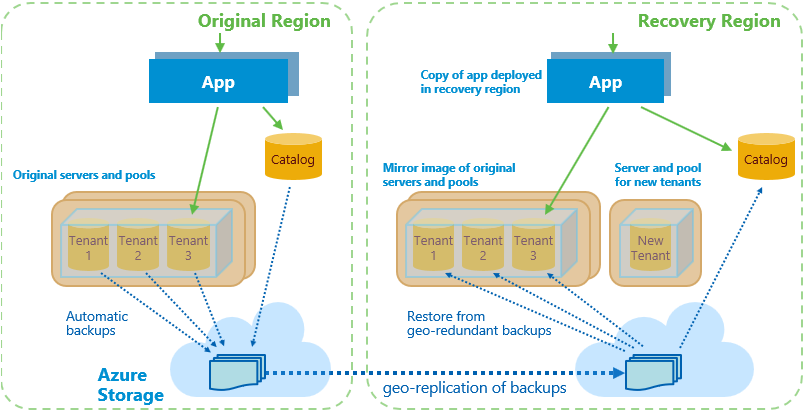
Modern SaaS providers can leverage cloud-native solutions such as:
- Active-active setups: Multiple live systems split the load for seamless failover.
- Active-passive setups: A backup system remains on standby, activated during failures.
These options enhance resilience and reduce downtime.
Implementing a Technical Disaster Recovery Strategy
Setting RTO and RPO Targets
Define tiered recovery goals based on application priority:
- Critical apps: RTO < 10 seconds, RPO < 1 minute.
- Key apps: RTO < 5 minutes, RPO < 15 minutes.
- Non-critical apps: RTO < 1 hour, RPO < 1 hour.
These targets ensure that critical services are restored swiftly, minimizing business impact.
Backup and Redundancy Strategies
Implement strategies such as:
- Immutable backups: Protect against ransomware attacks.
- Geo-redundant storage: Store backups across multiple locations to prevent regional failures.
- Multi-AZ and multi-region deployments: Distribute resources across zones and regions for resilience.
Managing Vendor SLAs and Compliance
Choosing a Cloud Provider with Strong DR Capabilities
When selecting a cloud provider, look for:
- 99.99%+ uptime guarantees: Ensure high availability commitments.
- SLA penalties: Compensation for downtime-related losses.
- Data portability: Secure migration options.
Compliance Considerations
Ensure compliance with industry regulations such as:
- HIPAA (Healthcare SaaS): Protects patient data.
- PCI DSS (Payment SaaS): Safeguards cardholder data.
- SOC 2 Type II & ISO 27001 certifications: Indicate strong security and DR measures.
Testing and Validating Your Disaster Recovery Plan

Testing Methods
Regular testing is essential to ensure your DR plan works as intended. Methods include:
- Tabletop exercises: Simulate disaster scenarios to refine responses.
- Full failover drills: Conduct live tests to assess system resilience.
Measuring Success
Track key metrics such as:
- Consistency score: Evaluates recovery reliability.
- Mean Time to Recovery (MTTR): Tracks restoration speed.
Future Trends in SaaS Disaster Recovery

AI-Powered Prediction and Prevention
Artificial Intelligence (AI) is enhancing DR by detecting anomalies before they cause failures. This proactive approach can significantly reduce the likelihood of outages.
Chaos Engineering for Stress Testing
Companies like Netflix use controlled failure simulations to identify weaknesses and improve resilience. This practice helps SaaS providers prepare for unexpected disruptions.
Emerging Technologies
- Quantum-proof security: Future-proofing encryption against quantum computing threats.
- Edge computing for faster recovery: Reducing latency by processing data closer to the source.
Final Thoughts: Your SaaS DR Action Plan
Disaster recovery is a continuous process that evolves with emerging threats and technologies. Here’s a quick roadmap to getting started:
- Identify risks: Assess vulnerabilities and mission-critical services.
- Set RTO and RPO: Define recovery objectives based on business needs.
- Implement backup strategies: Choose geo-redundancy and immutable storage.
- Deploy failover mechanisms: Utilize multi-cloud or hybrid setups for resilience.
- Test and optimize: Regularly run simulations and update your plan based on findings.
By proactively investing in a solid disaster recovery strategy, SaaS providers in the U.S. can ensure service continuity, maintain customer trust, and minimize financial losses. Start strengthening your DR plan today to stay ahead of potential disruptions.