The Best Bug Tracking Software for Dev Teams in 2023
In the fast-paced world of software development, bugs are an inevitable part of the process. According to a study, software bugs cost the U.S. economy $1.7 trillion in losses each year. To prevent such losses and ensure high-quality applications, teams need reliable bug tracking software that can help them identify, document, prioritize, and manage issues efficiently.
With so many options available, choosing the right tool can be overwhelming. However, several platforms have emerged as leaders in this space, offering powerful features tailored to different team needs. In this article, we explore the best bug tracking software of 2023, highlighting their key features, pricing, and use cases.
Zoho Bug Tracker
Zoho Bug Tracker is a sub-module of Zoho Projects, designed to streamline bug tracking with custom workflows, business rules, and SLAs. It offers a web-based interface that’s easy to set up and use, making it ideal for teams looking for an affordable solution.
Key Features:
– Manage Bugs: Submit, track, and fix bugs with detailed reports and milestones.
– Collaboration: Facilitate discussions and sharing through forums and news feeds.
– Invoicing: Track billable hours and generate invoices with a single click.
– Administer Access: Control user roles and monitor team progress.
Pricing:
– Free Plan: 1 project, 10 MB storage, 3 users
– Standard: $2 per user/month
– Premium: $3 per user/month
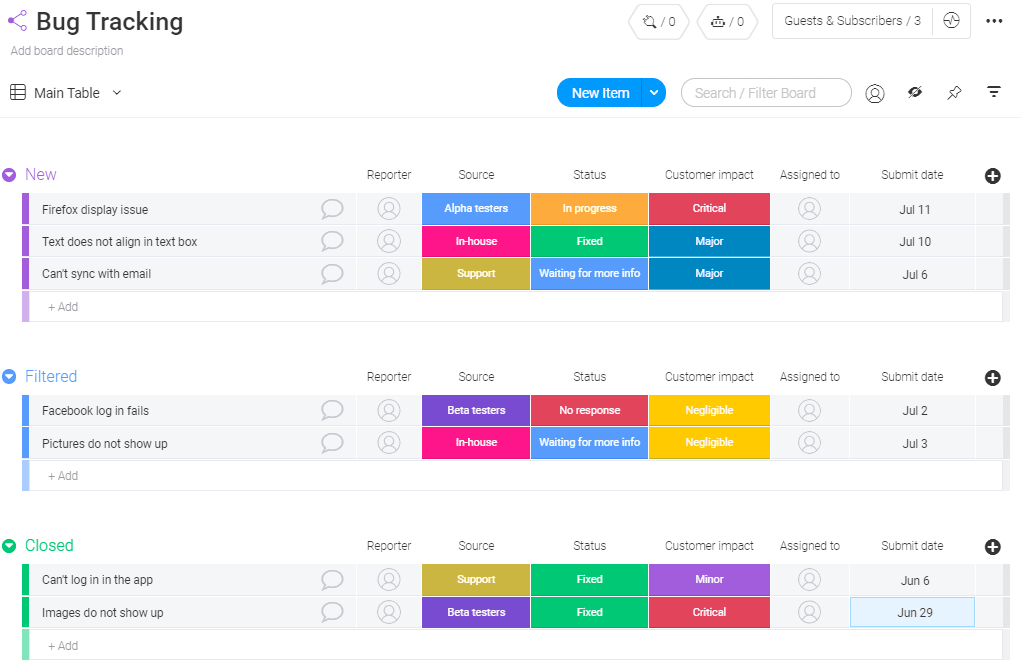
Monday.com – Bug Reporting Software
Monday.com is known for its visually appealing boards that allow teams to manage bugs using color-coding and real-time notifications. It supports Agile projects and integrates with over 36 apps, including Slack, Outlook, and Jira.
Key Features:
– Timeline View: Track tasks and projects with Gantt charts.
– Real-Time Notifications: Stay updated via desktop and mobile apps.
– Custom Workflows: Filter and prioritize bugs with tags and views.
– Security: Two-factor authentication for added security.
Pricing:
– Basic: $8 per user/month
– Standard: $10 per user/month
– Pro: $16 per user/month
– Enterprise: Custom pricing
Backlog – Online Bug Tracking Software
Backlog is a web-based bug tracking and project management tool tailored for developers. It offers features like Kanban-style boards, Gantt charts, and SVN repositories, making it ideal for managing IT projects.
Key Features:
– Tracks Progress: View task statuses and work progress.
– Task Management: Create, assign, and update tasks with due dates.
– Code Collaboration: Track changes and review code with team members.
– Bugs Fixer: Get notified of new issues and maintain a history thread.
Pricing:
– Free: 10 users, 1 project, 100 MB storage
– Starter: $35/month
– Standard: $100/month
– Premium: $175/month
– Enterprise: Custom pricing
Bugzilla – Open-Source Bug Tracking Software
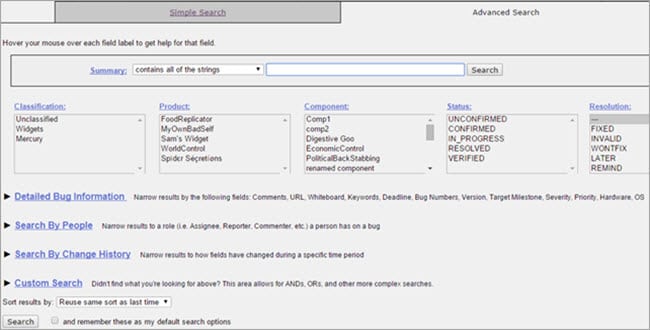
Bugzilla, developed by Mozilla, is a free and open-source bug tracking tool that supports both quick and advanced search options. It includes a powerful reporting system and collaboration features, making it popular among large corporations and open-source projects.
Key Features:
– Private Attachments: Mark comments and attachments as private.
– Database Support: Works with MySQL, PostgreSQL, and Oracle.
– Unicode Support: Fully supports multi-byte languages like Japanese and Chinese.
– Advanced Search: Create specific queries based on time, priority, and more.
Pricing:
– Free (Open Source)
Jira – Best Issue Tracking Software
Jira, developed by Atlassian, is one of the most popular tools among QA teams. It supports Scrum, Kanban, and Scrumban methodologies, allowing teams to plan flexibly. Jira also boasts JQL (Jira Query Language) for efficient data manipulation.
Key Features:
– Automation Engine: Automate tasks and processes.
– Customizable Boards: Use Scrum, Kanban, and Scrumban boards.
– Integration: Connects with 3,000+ third-party apps.
– Scalability: Offers 99.9% uptime SLA and unlimited storage.
Pricing:
– Free: 10 users maximum
– Standard: $10/month
– Premium: $14 per user/month
Mantis – PHP Bug Tracking Software
Mantis is a mature and stable open-source application coded in PHP, making it easy to install and use. It supports multiple databases and offers a mobile-optimized UI, making it suitable for teams working on complex projects.
Key Features:
– Notifications: Alert team members about issue updates.
– Access Control: Customize permissions on a per-project basis.
– Mobile Access: MantisTouch provides a mobile-optimized UI.
– Project Timelines: Track time and generate graphical reports.
Pricing:
– Free (Mantis BT)
– MantisHub:
– Starter: $4.95/month
– Gold: $22.95/month
– Platinum: $45.95/month
Redmine – Open-Source Issue Tracking Software

Redmine is another open-source bug/issue tracking system that serves as a project management tool. It integrates with version control systems and supports multiple languages, making it ideal for large teams.
Key Features:
– SCM Integration: Supports Git, SVN, and Mercurial.
– Custom Fields: Customize issue fields and workflows.
– News & Documents: Manage news, documents, and file management.
– Multiple Languages: Available in 49 languages.
Pricing:
– Free (Open Source)
Rollbar – Bug Tracking Automation Software
Rollbar automates error monitoring and triaging, making it ideal for agile deployment and continuous delivery in DevOps. It provides real-time feeds and instant alerts to help teams quickly resolve issues.
Key Features:
– Automated Data Gathering: Collects error data like request parameters and browser info.
– Native Integrations: Works with Asana, GitLab, Bitbucket, and more.
– Error Grouping: Automatically groups similar errors to reduce redundancy.
– Telemetry: Retrace browser events leading up to an error.
Pricing:
– Free: 5,000 free error events/month
– Essentials: $1/month
– Advanced: $83/month
– Enterprise: Custom pricing
Bugsnag – Web-Based Bug Tracking Software
Bugsnag monitors and tracks errors, bugs, and custom diagnostic data across multiple platforms. It is used by top enterprises like Airbnb and Shopify to detect and fix issues efficiently.
Key Features:
– Multi-Language Support: Supports JavaScript, iOS, Android, Python, Ruby, and Java.
– Error Monitoring: Reproduce errors with release and deploy mechanisms.
– Customer Support: Provides 24/7 support for resolving queries.
– Integrations: Integrates with GitHub, jQuery, and more.
Pricing:
– Free: Unlimited monitored apps
– Standard: $59/month
– Enterprise: Custom pricing
Trac – Issue Tracking/Management Software

Trac is an open-source bug/issue tracking software designed for development projects. It offers a minimalist design, integrated wiki pages, and the ability to link bugs to various tasks, files, and other bugs.
Key Features:
– SVN/Git Support: Integrates with version control systems.
– Duplicate Ticket Reconciliation: Avoid duplicate tickets.
– Permission System: Control access to sensitive information.
– Code Highlighting: View differences in files with code highlighting.
Pricing:
– Free (Open Source)
Asana – Bug/Issue Management Tool
Asana is a task management tool that also functions as one of the best issue tracking software. Its bug tracking templates allow teams to report, prioritize, and fix bugs efficiently.
Key Features:
– Collaboration: Choose project views that match your style.
– Boards: Keep teams focused on current tasks.
– Templates: Use over 50 project templates.
– Rules: Automate common tasks with custom rules.
Pricing:
– Free: Unlimited tasks, projects, and activity logs
– Premium: $10.99/month
– Business: $24.99/month
– Enterprise: Custom pricing
ReQtest – Bug Tracking Software

ReQtest is an all-in-one software quality assurance tool that offers bug tracking, Agile boards, and integration with Jira. It allows teams to capture bugs with video or images and synchronize with Jira issues.
Key Features:
– Data Visualization: Generate reports with bar or pie charts.
– Agile Board: Track project progress holistically.
– Screen Capture: Add images/videos with voice-over to bug reports.
– Requirement Management: Prioritize and track requirements.
Pricing:
– Professional: $45–$6 per user/month
– Enterprise: Custom pricing
BugHerd – Website Bug Tracking Tool
BugHerd is a web-based bug tracking tool that categorizes issues into four lists: Backlog, To Do, Doing, and Done. It captures screenshots of issues and allows clients to pin feedback directly to web page elements.
Key Features:
– Auto-Capture: Automatically gather data for bug reporting.
– Integrations: Works with GitHub, Basecamp, Slack, and more.
– Client Feedback: Send feedback directly to the board with screenshots.
– Annotations: Add comments and notes directly on the website.
Pricing:
– Standard: $39/month
– Studio: $39/month
– Premium: $109/month
– Enterprise: $45/month
DebugMe – Visual Bug Tracking App
DebugMe is a visual bug tracking app that allows teams to annotate web pages and track bugs easily. It offers a Kanban board for managing tasks and is ideal for small teams.
Key Features:
– Annotate Pages: Draw, highlight, and pin areas on web pages.
– Integrations: Connects with Jira, Trello, Pivotal Tracker, and Visual Studio.
– Team Roles: Assign roles like Admin, Developer, or Project Manager.
– Feedback Toolbar: Report issues directly from the website.
Pricing:
– Free: Feedback tool, customizable Kanban board
– Standard: $8/month
– Professional: $19/month
– Enterprise: $45/month
Bugyard – Visual Bug Tracking Tool
Bugyard helps teams receive visual feedback from clients and teammates directly on websites. It automatically gathers user metadata and enables live feedback, reducing email threads.
Key Features:
– Visual Feedback: Get direct feedback on web pages.
– Instant Notifications: Receive alerts via Gmail and Slack.
– Integrations: Connects with Zendesk, Freshdesk, Trello, and more.
– Responsive Design: Display website sections exactly as users see them.
Pricing:
– Freelancer: $11/month
– Team: $22/month
– Agency: $58/month
Conclusion
Choosing the right bug tracking software depends on your team’s specific needs, budget, and workflow. Whether you’re looking for an open-source solution like Bugzilla or a cloud-based platform like Jira, there’s a tool that fits every scenario. By leveraging these tools, teams can streamline their bug tracking processes, improve collaboration, and deliver high-quality software efficiently.