Understanding the Affordable Care Act and Healthcare Systems in the United Kingdom
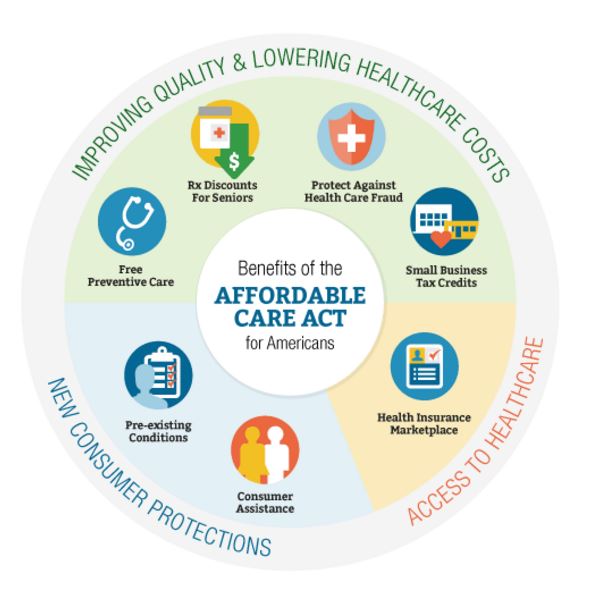
The Affordable Care Act (ACA), often referred to as Obamacare, has significantly expanded access to health insurance for millions of Americans. It introduced the Health Insurance Marketplace, a platform where individuals can find more affordable health insurance options. While the ACA is primarily a U.S.-based policy, its principles and structure have influenced discussions about healthcare reform globally, including in the United Kingdom. This article explores the key aspects of the ACA, the differences between universal healthcare coverage and single-payer systems, and how these concepts are implemented in the UK.
What is the Affordable Care Act?
The Affordable Care Act was signed into law in 2010 with the aim of making health insurance more accessible and affordable. One of its most notable features is the Health Insurance Marketplace, which allows individuals to compare and purchase health plans. The ACA also introduced several protections for consumers, such as preventing insurers from denying coverage based on pre-existing conditions and eliminating lifetime or annual limits on essential health benefits.
To be eligible for coverage through the Marketplace, individuals must live in the U.S., be a citizen or lawful resident, and not be incarcerated. There is no income limit, making it possible for people of all financial backgrounds to access health insurance.
Key Protections Under the ACA
Under the ACA, patients insured through the Marketplace enjoy several important rights:
- No discrimination: Insurers cannot refuse coverage based on sex or pre-existing conditions.
- No lifetime or annual limits: Coverage for essential health benefits cannot be capped.
- Young adults: Individuals can stay on their family’s insurance plan until age 26.
These protections have made the ACA a cornerstone of U.S. healthcare reform, though challenges remain in achieving universal coverage.
How Much Does Health Insurance Cost Through the Marketplace?
The cost of health insurance through the Marketplace varies depending on factors such as location, income, and household size. Premiums are the monthly payments for the insurance plan, but additional out-of-pocket costs may apply when seeking medical care. These can include deductibles, copayments, and coinsurance. Understanding these costs is crucial for making informed decisions about health insurance.
Enrolling in a Marketplace Plan
Enrollment in a Marketplace plan occurs during open enrollment periods, typically once a year. During this time, individuals can choose a new plan, continue with their current one, or make changes to their existing coverage. Life events such as moving or having a baby may qualify individuals for a special enrollment period, allowing them to update their coverage outside of the regular open enrollment window.
Universal Healthcare Coverage vs. Single-Payer Systems
Healthcare reform has been a topic of debate in the U.S. for decades. Two terms often used are “universal healthcare coverage” and “single-payer” system. However, these terms are frequently conflated, leading to confusion about their meanings.
Universal coverage refers to a system where every individual has access to health insurance, regardless of income or pre-existing conditions. This can be achieved through government-run programs, private insurance, or a combination of both.
Single-payer systems, on the other hand, involve a single entity—usually the government—paying for healthcare claims. This model is used in countries like the United Kingdom, where the National Health Service (NHS) provides universal coverage. However, not all countries with universal coverage operate under a single-payer system. For example, Canada has universal coverage but does not have a single-payer system for all services.
The UK’s Approach to Healthcare
The United Kingdom is a prime example of a country with both universal coverage and a single-payer system. The NHS is funded by tax revenue and provides free healthcare to all residents. While the NHS is a single-payer system, it also allows for private health insurance, which can be used for elective procedures or faster access to care.
In the UK, the government not only pays for healthcare but also owns hospitals and employs medical staff, making it a form of socialized medicine. This contrasts with the U.S., where Medicare and the Veterans Health Administration are single-payer systems but do not cover the entire population.
Challenges in the U.S. Healthcare System
Despite the ACA’s efforts, the U.S. still faces significant challenges in achieving universal coverage. Many Americans remain uninsured, and the cost of healthcare continues to rise. Proposals like “Medicare for All” have gained traction, aiming to provide government-funded coverage to all citizens. However, political gridlock and debates over funding and implementation have hindered progress.
Lessons from Other Countries
Countries like Germany, Singapore, and Japan have achieved high levels of coverage through different models. Germany uses a mix of public and private insurance, while Singapore relies on a government-run insurance system combined with personal savings accounts. Japan has a competitive insurance market that ensures universal coverage without a single-payer system.
These examples highlight that there is no one-size-fits-all approach to healthcare reform. Each country must tailor its system to meet the needs of its population.
Conclusion
The Affordable Care Act has made significant strides in expanding access to health insurance in the U.S., but challenges remain in achieving universal coverage. Understanding the difference between universal healthcare coverage and single-payer systems is essential for informed discussions about healthcare reform. The United Kingdom’s NHS serves as a model of what can be achieved with a single-payer system, offering insights for other nations seeking to improve their healthcare delivery. As the global conversation on healthcare continues, learning from successful models will be key to developing effective solutions.